The Efficiency Truth of the Nickel-Iron Battery
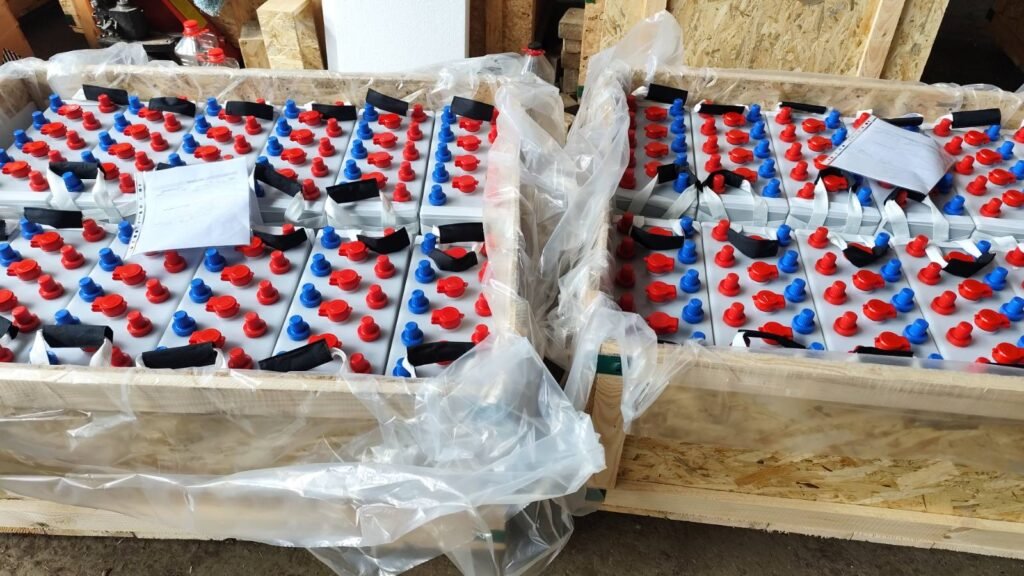
In the technical discussions surrounding renewable energy, “efficiency” is often touted as the most important metric. Critics of alkaline technology will quickly point out that its round-trip efficiency—the amount of energy you get out versus what you put in—is lower than that of lithium or lead-acid batteries. While this is factually true, focusing solely on this single number misses the broader economic and operational picture of modern off-grid systems.
The Nickel-Iron Battery typically has a round-trip efficiency of around 60-70%, compared to 80% for lead-acid and 90%+ for lithium. In the past, when solar panels were incredibly expensive, wasting 30% of your harvested energy was a significant financial penalty. However, the price of solar photovoltaic panels has plummeted by over 90% in the last decade, fundamentally changing the equation and making battery longevity far more valuable than raw efficiency.
The Economics of Cheap Solar
Today, solar panels are the cheapest part of the power system, often costing less than the racking used to mount them. This means that compensating for a less efficient battery is as simple and affordable as adding two or three extra panels to your array. By spending a few hundred dollars on extra solar capacity, you can easily overcome the efficiency loss while gaining the massive benefit of a battery that lasts thirty years.
Trading Efficiency for Durability
It is a strategic trade-off: you accept a slightly lower electrical efficiency in exchange for nearly infinite mechanical durability. Lithium batteries are highly efficient, but they are fragile and chemically volatile. The Edison Battery asks for a little more sunshine to get fully charged, but in return, it gives you a tank-like robustness that no efficient battery can match. In the long run, replacing a “highly efficient” battery three times is far less efficient for your wallet.
Heat Dissipation and Safety
The “lost” energy in an alkaline battery is primarily converted into heat and the electrolysis of water. While this is technically a loss, it also means the battery is not storing that energy in a way that could lead to a thermal runaway. The inefficiency is actually a byproduct of the safe, water-based chemistry that prevents the battery from turning into a fire hazard, a safety feature that is well worth the extra solar panels.
Usable Capacity vs Nameplate Efficiency
Another factor to consider is the usable capacity of the battery bank over its lifetime. A lead-acid battery might be more efficient, but you can only safely use 50% of its rated capacity without killing it. An alkaline bank allows for 100% depth of discharge, meaning you can utilize every amp-hour you paid for. This deep cycling capability often negates the efficiency difference in real-world daily usage scenarios.
Winter Performance Context
In deep winter, efficiency does matter, which is why sizing the solar array correctly is important. However, lead-acid batteries lose significant capacity in the cold, often dropping by 50% in freezing temps. The Nickel-Iron Battery retains its ability to function in the cold, so while its charging efficiency might be lower, its actual delivery of power in harsh conditions is often superior to the theoretical efficiency of a frozen lead battery.
The Sustainability of Efficiency
True efficiency should also measure the resources used over time. Is it efficient to manufacture, ship, and recycle three sets of lithium batteries over 30 years? The energy consumed in the mining, manufacturing, and transportation of disposable batteries far outweighs the extra solar energy required to charge a permanent alkaline bank. From a planetary perspective, the long-lasting battery is the most efficient choice.
Efficiency Myths Debunked
Here is a summary of why the efficiency number is misleading.
- Panel Cost: Solar is cheap; adding panels is easier than replacing batteries.
- Lifespan: Efficiency drops to 0% when a standard battery dies in 5 years.
- Capacity: You get 100% usable capacity vs 50% for “efficient” lead-acid.
- Cold: Real-world winter performance beats lab-rated efficiency stats.
- Safety: Inefficiency manifests as harmless heat, not explosive risk.
- Ecology: Manufacturing one battery is more efficient than manufacturing five.
- Reliability: A robust, less efficient battery works when delicate ones fail.
- Charging: Modern MPPT controllers maximize the harvest to offset losses.
- Value: Total cost of ownership is lower despite the efficiency gap.
Conclusion on Battery Efficiency
Do not let the obsession with a single percentage point on a spec sheet blind you to the reality of long-term ownership. Efficiency is just one variable in a complex equation that includes cost, lifespan, safety, and reliability. In the modern era of affordable solar, the penalty for lower efficiency is negligible, but the reward for durability is immense.
Choosing a Nickel-Iron Battery acknowledges that the goal is not to have the most efficient laboratory experiment, but to have the most reliable home power plant. By slightly oversizing your solar array, you unlock the power of a battery that will serve you faithfully for decades. It is a pragmatic, real-world efficiency that saves you money and hassle for the rest of your life.








Post Comment